
As seniors, your home is often your most valuable asset. It is a place of comfort, memories, and security. Unfortunately, criminals know this, and a growing form of fraud called home title theft (or deed fraud) is targeting unsuspecting homeowners.
What Is Home Title Theft?
Home title theft happens when someone fraudulently forges your name on a property deed and files it with the county recorder’s office. This can make it look like they legally own your home. Once the fraudulent deed is recorded, the thief may attempt to:
- Take out loans against your property.
- Sell the home without your knowledge.
- Leave you tangled in costly and stressful legal battles.
This crime is particularly concerning for seniors, as thieves often assume older homeowners are less likely to notice unusual activity.
What About Home Title Lock Services?
You may have heard of Home Title Lock or similar services advertised on TV or radio. Here’s what you need to know:
- It is not insurance. These services don’t reimburse you for losses.
- It is a monitoring service. They notify you if there is activity involving your home’s title, such as someone filing a document against your property.
- It does not prevent fraud. It only alerts you after the fact.
The good news is, you don’t need to pay for this type of monitoring. Seniors can get similar protection for free.
Free Ways to Monitor Your Property Title
Most county recorders and assessor’s offices now provide free property fraud alert services. These work much like Home Title Lock, notifying you whenever a document is recorded against your property. Here are a few steps you can take:
- Sign up for your county’s fraud alert system.
Many counties have an online “Property Notification Service” or “Fraud Alert” that will send you an email if there’s activity on your deed.
Example: In Los Angeles County, the Property Document Notification Program is free to all homeowners. - Check your property records regularly.
Most counties allow you to look up your deed online to ensure nothing has changed. - Request a copy of your property profile.
You can request a current copy of your deed or property profile from the county recorder or through a trusted real estate professional to verify ownership details.
How to Protect Yourself from Deed Fraud
Along with signing up for free monitoring, here are other steps seniors can take to safeguard their homes:
- Keep your personal information private. Don’t share Social Security numbers or banking details unless absolutely necessary.
- Shred sensitive documents. Prevent thieves from stealing information out of your trash.
- Be cautious with powers of attorney. Only give this authority to someone you deeply trust.
- Act quickly if something looks wrong. If you receive a notice from the county about a filing you don’t recognize, contact the recorder’s office immediately and consult a real estate attorney.
Final Thoughts
Your home is one of your most valuable assets, and protecting it from fraud is just as important as protecting it from fire or theft. While paid services like Home Title Lock can sound appealing, you don’t need to spend money to gain peace of mind. Free county monitoring programs, good recordkeeping, and vigilance go a long way toward keeping your property safe.
Stay alert, protect your information, and take advantage of the free resources available to you.
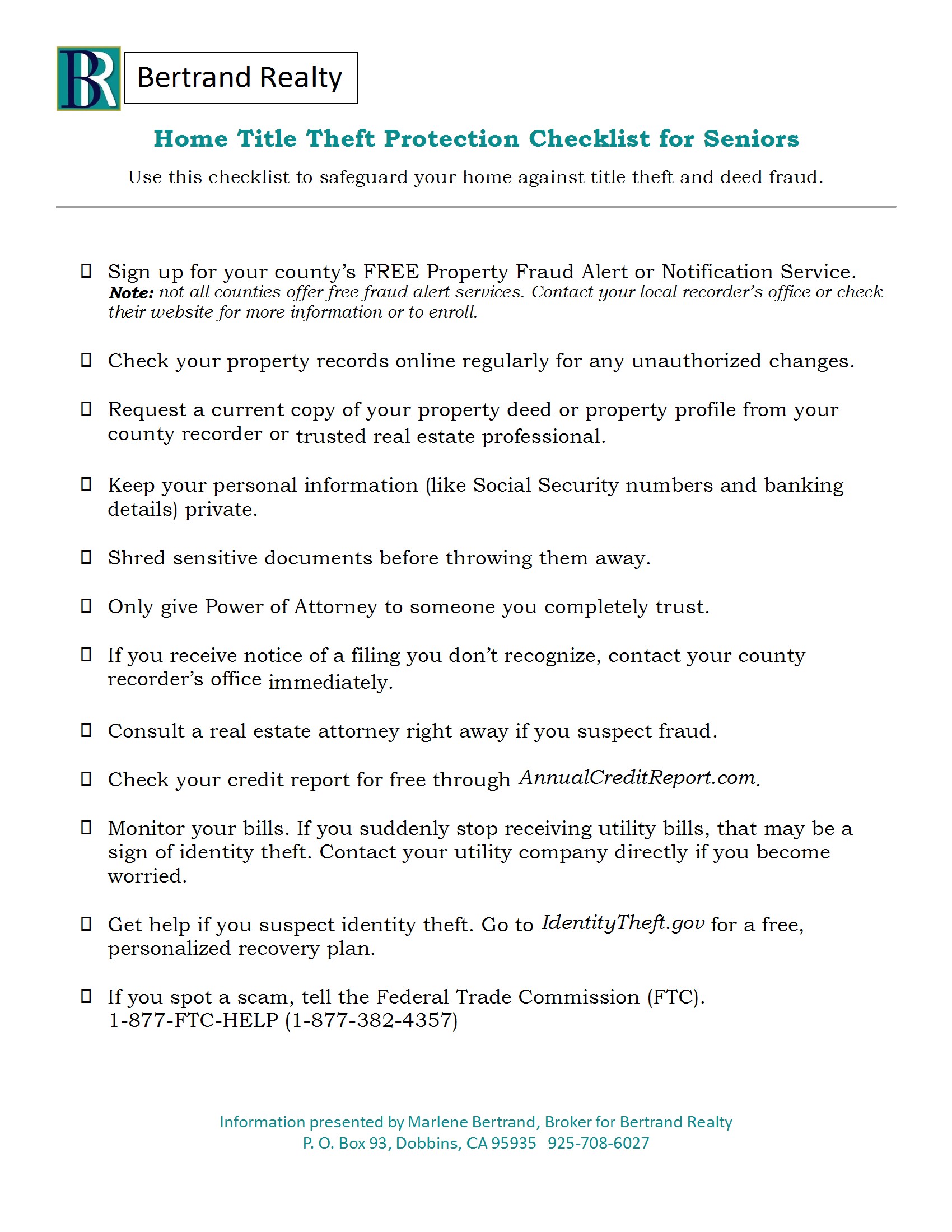
Print this copy of the Home Title Theft Protection Checklist for Seniors. This is a simple checklist that you can keep on hand with steps to sign up for free monitoring and protect yourself from home title theft.




 Bertrand Realty Blog