
New Home, New Responsibilities: Must-Know Maintenance for First-Time Owners

Hammer

Stepping into homeownership means stepping into stewardship. First-time buyers quickly learn that small, regular tasks protect comfort, safety, and long-term value. This guide highlights the fundamentals so you feel prepared instead of overwhelmed.

The Takeaways

Tackle a few recurring tasks, know your home’s vulnerable spots, and check systems seasonally. The payoff is fewer repairs and a smoother first year.

Common Tasks and Why They Matter

TaskFrequencyBenefit
Clean guttersTwice a yearPrevents water damage
Replace HVAC filtersEvery 1 to 3 monthsBetter air quality
Inspect caulkingYearlyLower drafts and moisture
Test alarmsMonthlySafety confidence
Trim landscapingSeasonalKeeps pests and moisture away


How To Build a Simple Routine as a New Homeowner

Different seasons highlight different priorities. Here is a streamlined routine that keeps things manageable.

  1. Start with safety: Test smoke and carbon monoxide alarms. Look at fire extinguisher dates. Make sure walkways stay clear.

  2. Do a small exterior check: Walk around the house monthly. Notice changes in paint, wood softness, or gaps around doors.

  3. Give your HVAC a predictable pattern: Consistent filter changes keep the system from working harder than necessary.

  4. Watch for moisture: Moisture is usually the earliest sign of trouble. Look under sinks, around toilets, and near the water heater.

Common Mistakes New Homeowners Often Make

  • Waiting until something breaks before learning where the shutoff valves are

  • Forgetting to maintain the yard, leading to pest problems

  • Ignoring minor drips that later become expensive repairs

  • Overlooking vent cleaning for bathrooms and dryers

  • Not inspecting outdoor drainage after heavy rains

Water Heater Care Keeps Hot Water Flowing Smoothly

Your water heater works quietly until the day it doesn’t. Get familiar with basic upkeep, such as checking for small leaks, noting unusual noises, and flushing sediment each year to keep the system efficient. If you ever need routine parts or replacements, look for quality components, such as modern water-heating system parts, so your heater runs reliably. Choosing energy-saving parts also helps keep monthly bills under control.

Checklist: Your First Month in the House

  • Find the main water shutoff valve

  • Label the electrical panel clearly

  • Replace all HVAC filters on move-in in

  • Check exterior door seals

  • Verify dryer vent airflow

  • Inspect outdoor drainage paths

  • Note where appliances drain and vent

FAQ for First-Time Homeowners

Q: Do I need professional inspections every year?
Yes. Systems like HVAC and roofing hold up longer when a technician checks them annually.

Q: Is gutter cleaning really that important?
Absolutely. Clogged gutters are one of the most common causes of hidden water damage.

Q: How can I avoid pests?
Keep shrubs trimmed, seal cracks, and remove damp debris around the foundation.

Q: What should I do before winter?
Test your heating system early, insulate outdoor faucets, and check weatherstripping.

The Dryer Vent Detail New Owners Often Forget

Dryer vents gradually collect lint that slips past the filter. When that buildup grows, drying takes longer, and the risk of a fire increases. Clean the full vent line twice a year and check the outdoor flap to ensure it opens freely.

Seasonal Snapshot: A Quick Reference List

  • Spring: Remove leftover winter debris, inspect the roof visually from the ground, and clean exterior vents.
  • Summer:  Look for signs of insects near the foundation, check window screens, and maintain garden space.
  • Fall: Clear gutters, test the furnace early, and rake leaves away from the home.
  • Winter: Watch for drafts, monitor indoor humidity, and protect pipes in cold snaps.

Conclusion

Homeownership becomes far less stressful once you understand what to maintain and when to do it. With a few steady habits, your home stays safer, systems last longer, and you gain confidence in caring for one of your biggest investments.

Copyright 12/8/2025. Guest writer: Annabelle Harris.
Posted in Home Maintenence | Tagged , , , , , , | Leave a comment

Moving Closer to Family: Staying Connected Without Losing Your Independence

Relocating near family often begins as a practical choice — child care help, aging parents, or a fresh start in familiar surroundings. Yet, what begins as a logistical decision can quickly become an emotional balancing act: connection vs. independence.

This move can be deeply fulfilling if planned with foresight — and a clear understanding of how to protect your personal space and professional identity.

Quick Take: The Heart of the Move

  • Connection thrives on rhythm, not proximity. Plan time together and time apart.
  • Your neighborhood shapes your energy. Proximity doesn’t mean dependence.
  • Clear boundaries prevent burnout. They make love sustainable.
  • Growth continues. Relocation can boost career and education opportunities.

Pick the Neighborhood That Fits You

The right location allows closeness without crowding. Think less about zip codes and more about lifestyle geometry: the distance between your needs and your future goals.

FactorWhy It MattersTip
Commute ComfortTen minutes away can feel “close enough” but still maintain autonomy.Test the route during busy hours.
Walkability & Local AmenitiesYou’ll need cafés, parks, or fitness centers that nurture your individuality.Check local maps and pedestrian scores.
Housing FlexibilityApartments, condos, or senior-friendly designs evolve with you.Visit mixed-use developments before signing.
Community SpiritActive neighbors reduce emotional overreliance on family.Attend a nearby community or library event.

Boundaries: The Art of Loving from a Healthy Distance

Living nearby shouldn’t blur the edges between available and always on call.

Checklist: Your Boundary Blueprint

  • ☐ Agree on “visit hours” — spontaneity is fine, but not constant.
  • ☐ Use shared calendars for clarity, not control.
  • ☐ Practice saying “not today” without guilt.
  • ☐ Keep one day a week fully to yourself.
  • ☐ Clarify how you’ll handle caregiving expectations early.

Setting expectations in writing — even a shared note app — can preserve harmony. Experts in family psychology say clear boundaries don’t distance love; they define it.

Create Connection Rituals

Proximity alone doesn’t ensure connection; rituals do.

  • Weekly Coffee Stops: Short, consistent time builds comfort.
  • Family Text Threads: Keep tone light — share wins, not worries.
  • Seasonal Traditions: Sunday breakfasts, garden days, or movie nights become anchors.
  • Micro-gestures: Dropping off a meal or a quick porch visit can say more than an all-day hangout.

Your presence, when it’s intentional, feels richer.

Growth Doesn’t Stop — It Expands

Moving closer to family often simplifies logistics — and opens professional doors. With more stability and support, you can take bold steps toward your next career phase.

Maybe this is the time to go back to school, especially in a field that aligns with family and community care. Healthcare programs, for example, can be pursued online, blending flexible study with family life. Earning a healthcare degree also lets you make a meaningful difference in people’s lives. If this balance appeals to you, consider this as a pathway to both independence and purpose.

For those in remote work, the move can also be strategic: proximity to loved ones can help reduce burnout while maintaining productivity.

Protect Your Peace (and Property)

New homes come with old surprises — leaky pipes, aging appliances, unexpected costs. A home warranty acts as a quiet protector, allowing you to focus on family rather than frantic repairs. It can also cover equipment removal and breakdowns caused by poor installations, saving time and headaches. For coverage that keeps your focus where it belongs, this is worth exploring before unpacking those final boxes.

Independence ≠ Isolation

You can live close without losing autonomy. The key is diversity of relationships. Get to know neighbors, join hobby circles, and volunteer locally — these networks give you both independence and belonging.

Community integration tips show that joining even one local group can reduce loneliness by over half compared to staying socially limited to family.

FAQ: Family Nearby — Freedom Intact

How do I keep independence when my family wants constant time?
Define “shared hours” and “solo hours” — then enforce them kindly.

Is it rude to say no to unplanned drop-ins?
Not at all. Boundaries keep affection sustainable. Use phrases like, “I’d love to catch up tomorrow — today’s my rest day.”

How can I make this move feel like my move?
Curate your environment — art, furniture, or routines that feel distinctly you. Familiar autonomy signals make new homes emotionally stable.

Transition Made Easier

Relocation involves multiple emotional layers. Many professional moving checklists recommend breaking tasks into weeks to minimize fatigue. Unpack community first — find your coffee shop, walking route, and family rhythm second.

Bullet Recap:

  • Plan for proximity, not dependency.
  • Structure visits; don’t surrender spontaneity.
  • Prioritize one hobby or personal pursuit post-move.
  • Keep communication light but honest.
  • Leverage digital boundaries — “Do Not Disturb” is self-care.

Home as Harmony

Moving closer to family can be a turning point, not a trade-off. When independence and affection coexist, you create a life that is both grounded and open-ended. This is your next chapter — where home includes family, but life still belongs entirely to you.

Copyright 2025 Anabelle Harris (Guest Author)

Posted in moving | Tagged , , , , , , | Leave a comment

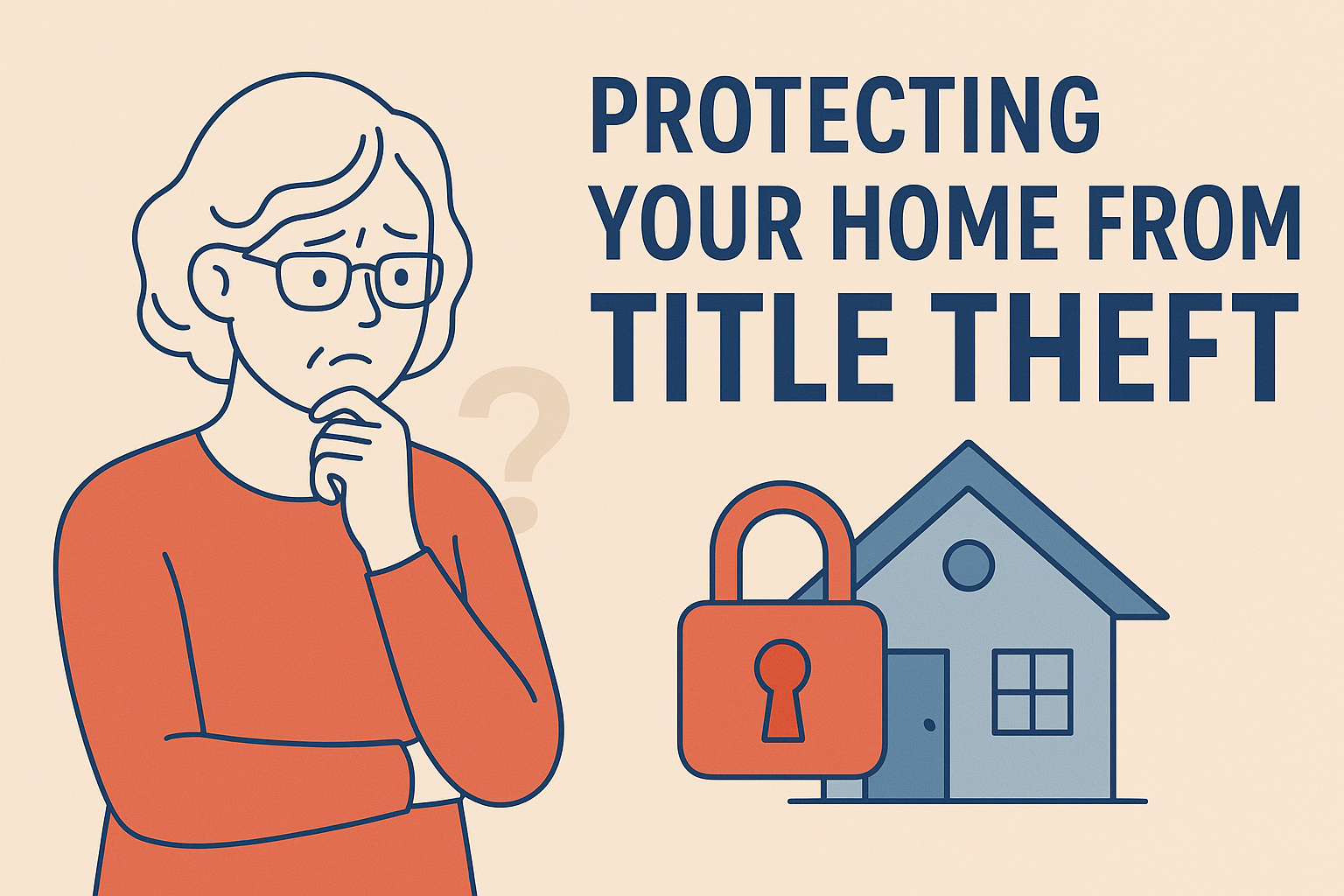
Protecting Your Home from Title Theft: What Seniors Need to Know

As seniors, your home is often your most valuable asset. It is a place of comfort, memories, and security. Unfortunately, criminals know this, and a growing form of fraud called home title theft (or deed fraud) is targeting unsuspecting homeowners.

What Is Home Title Theft?

Home title theft happens when someone fraudulently forges your name on a property deed and files it with the county recorder’s office. This can make it look like they legally own your home. Once the fraudulent deed is recorded, the thief may attempt to:

  • Take out loans against your property.
  • Sell the home without your knowledge.
  • Leave you tangled in costly and stressful legal battles.

This crime is particularly concerning for seniors, as thieves often assume older homeowners are less likely to notice unusual activity.

What About Home Title Lock Services?

You may have heard of Home Title Lock or similar services advertised on TV or radio. Here’s what you need to know:

  • It is not insurance. These services don’t reimburse you for losses.
  • It is a monitoring service. They notify you if there is activity involving your home’s title, such as someone filing a document against your property.
  • It does not prevent fraud. It only alerts you after the fact.

The good news is, you don’t need to pay for this type of monitoring. Seniors can get similar protection for free.

Free Ways to Monitor Your Property Title

Most county recorders and assessor’s offices now provide free property fraud alert services. These work much like Home Title Lock, notifying you whenever a document is recorded against your property. Here are a few steps you can take:

  1. Sign up for your county’s fraud alert system.
    Many counties have an online “Property Notification Service” or “Fraud Alert” that will send you an email if there’s activity on your deed.

    Example: In Los Angeles County, the Property Document Notification Program is free to all homeowners.
  2. Check your property records regularly.
    Most counties allow you to look up your deed online to ensure nothing has changed.
  3. Request a copy of your property profile.
    You can request a current copy of your deed or property profile from the county recorder or through a trusted real estate professional to verify ownership details.

How to Protect Yourself from Deed Fraud

Along with signing up for free monitoring, here are other steps seniors can take to safeguard their homes:

  • Keep your personal information private. Don’t share Social Security numbers or banking details unless absolutely necessary.
  • Shred sensitive documents. Prevent thieves from stealing information out of your trash.
  • Be cautious with powers of attorney. Only give this authority to someone you deeply trust.
  • Act quickly if something looks wrong. If you receive a notice from the county about a filing you don’t recognize, contact the recorder’s office immediately and consult a real estate attorney.

Final Thoughts

Your home is one of your most valuable assets, and protecting it from fraud is just as important as protecting it from fire or theft. While paid services like Home Title Lock can sound appealing, you don’t need to spend money to gain peace of mind. Free county monitoring programs, good recordkeeping, and vigilance go a long way toward keeping your property safe.

Stay alert, protect your information, and take advantage of the free resources available to you.

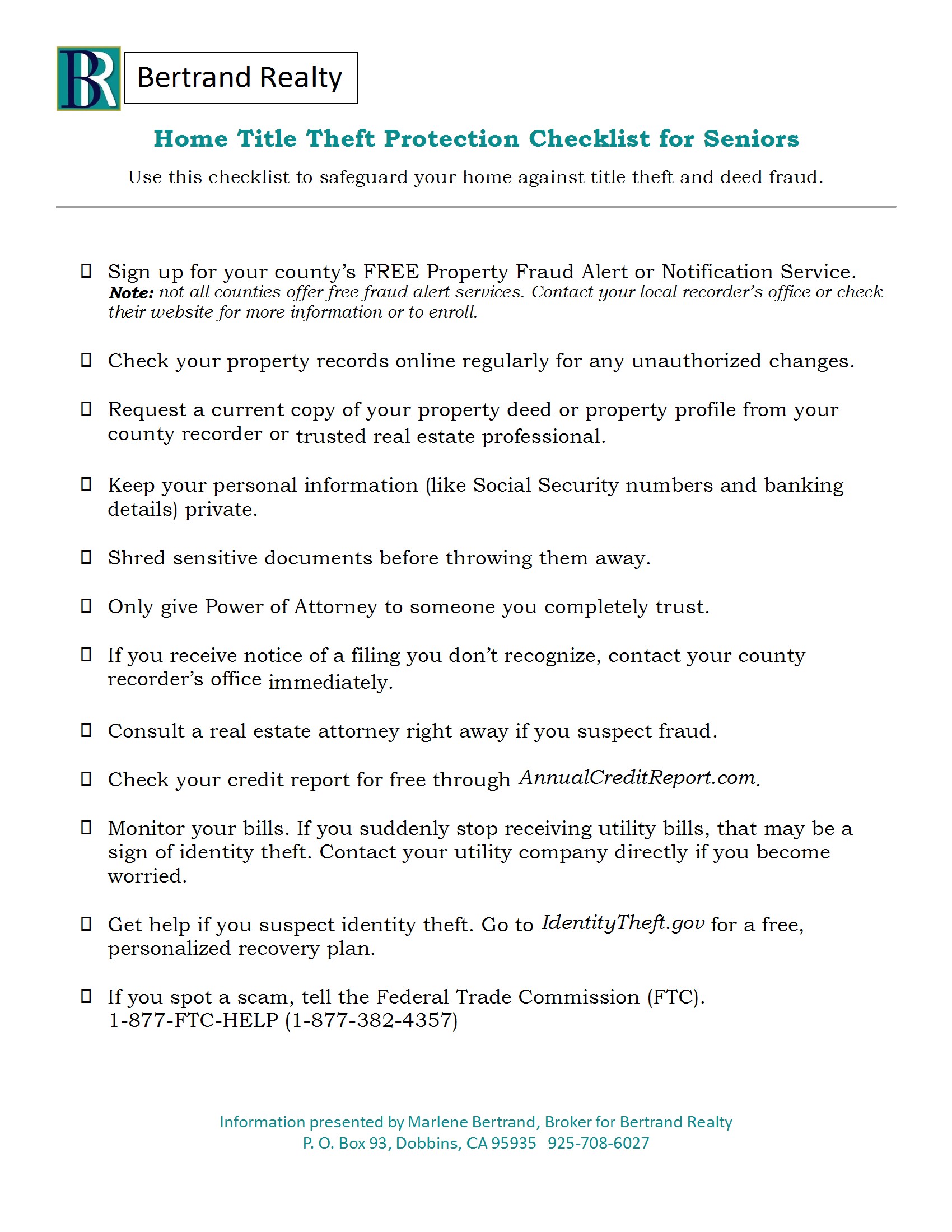
Print this copy of the Home Title Theft Protection Checklist for Seniors. This is a simple checklist that you can keep on hand with steps to sign up for free monitoring and protect yourself from home title theft.

Posted in Homeowner, protection, Seniors, SRES, title | Tagged , , , , , , | Leave a comment

The Importance of Estate Planning for Senior Homeowners

While it’s never too early to create a will or estate plan, it becomes especially important once you own a home, particularly if you’re over 55.

Without clear legal instructions, decisions about your property could be made by the state, not your family.

  • No will or trust? State law decides who inherits your home.
  • The probate process can be long, expensive, and emotionally draining for your heirs.
  • In rare cases, your property could even go to the state if no heirs are found.

If you haven’t made a plan yet, start by asking:

  • Would placing your home in a trust help your heirs avoid probate?
  • Is a “transfer on death” deed available in your state? What are the pros and cons?
  • Could your beneficiaries realistically afford the mortgage, taxes, or upkeep?
  • Is your home title current, especially after refinancing, name changes, or ownership adjustments?

Asking these questions now and getting a plan in place can help you protect your legacy and prevent confusion, delays, or disputes down the road.

As a Seniors Real Estate Specialist®, I work with clients over 55 every day, and I see just how important it is to have a plan for what happens to your home after you’re gone. If you’re ready to take the next step, I have a trusted network of estate planning attorneys I’d be happy to refer you to.

Believe me, your family will thank you.

For more information, please read the National Association of REALTORS Consumer Guide: Your Home and Estate Planning.

#SRES #estateplanning #SeniorRealEstate #seniorsrealestatespecialist

Posted in Seniors, SRES | Tagged , , , | Leave a comment

What Does a Seniors Real Estate Specialist Do?

As a REALTOR®, I assist clients with buying and selling homes. But as a Seniors Real Estate Specialist (SRES), my role goes far beyond traditional real estate services.

An SRES is specially trained to meet the unique needs of clients aged 50 and older. My goal is to help seniors live comfortably, whether they are relocating, refinancing, downsizing, or choosing to remain in their current home. One of the most meaningful aspects of my work is supporting seniors who wish to age in place, that is, continue living safely and independently in the homes they love.

To support this, I regularly check in with my senior clients to understand their evolving needs. I help connect them with trusted resources for services such as:

  • Meals on Wheels
  • Transportation to medical appointments
  • Help with filling out medical or legal forms
  • In-home caregiving support
  • Home modifications for improved mobility or safety
  • Guidance on financial decisions, including reverse mortgages

I serve as a guide and advocate, helping seniors navigate the many transitions that can come with aging.

Seniors are also among the top targets for scams, and many aren’t aware of how to identify or respond to these threats. That’s why I offer a presentation called Senior Safety Tips. This practical, easy-to-understand session teaches seniors how to recognize scams, protect their personal information, and stay safe both online and at home. While these safety tips are helpful for people of all ages, I focus on sharing them with seniors because they are often the most vulnerable, and my mission as an SRES is to empower and protect them at every stage of their real estate journey and beyond.

Please contact me if you would like more information about what an SRES does and how I may be able to help you..

Posted in Seniors, SRES | Tagged , , | Leave a comment